Energy Audits for Operations Managers
If you are an Operations Manager, energy is already part of your job.
You deal with plant reliability and equipment reliability.
You manage contractors and shutdowns.
You respond when systems fail, drift, or run outside of hours.
You feel the pressure when costs rise, but capex is constrained.
Energy audits are often framed as finance or sustainability exercises. On-site, their value is operational.
This article explains how commercial and industrial energy audits support Operations Managers across real Australian sites.
Why energy problems show up in operations
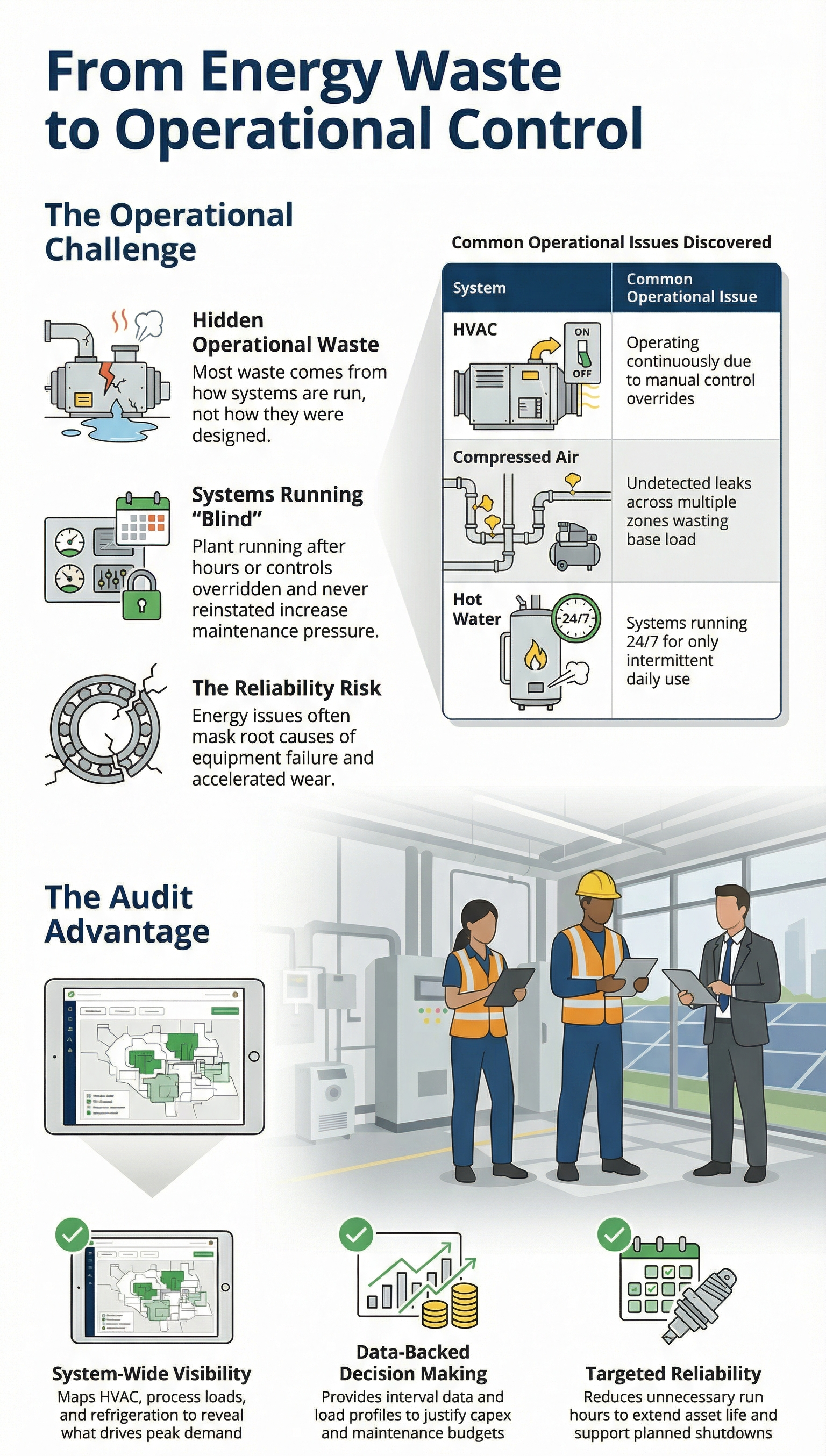
Most energy waste is operational. It comes from how systems are run, not how they were designed.
Common issues seen on site include:
HVAC and process plant running after hours
Controls overridden and never reinstated
Poor coordination between systems
Ageing equipment operating outside design intent
Contractors fixing symptoms rather than root causes
These problems increase energy costs. More importantly, they increase reliability risk and maintenance pressure.
A properly conducted AS/NZS 3598 energy audit helps you clearly identify these issues using site data and physical inspection.
What an energy audit gives you in practice
A properly scoped commercial or industrial energy audit is not a generic efficiency checklist.
For Operations Managers, it delivers three practical outcomes.
Clear visibility across systems
Audits map how energy is actually used across HVAC, process loads, compressed air, refrigeration, lighting, and hot water.
What runs continuously
What drives peak demand
Where controls do not match operations
How systems interact during normal and abnormal conditions
This visibility is critical on older sites and mixed-use facilities where changes have layered over time.
Prioritised actions that fit operations
Good audits do not produce long, unrealistic action lists.
Findings are grouped into:
Low disruption operational fixes
Control and scheduling changes
Maintenance-related issues misidentified as energy problems
Medium to longer-term upgrades that affect reliability
This allows you to align actions with shutdown windows, access limits, and contractor availability.
Evidence to support decisions
Operations Managers often know something is wrong on site, but lack data to push for change.
Audits provide:
Interval data and load profiles
Clear cause and effect explanations
Quantified impacts on demand and cost
Links between equipment condition and performance
This helps you justify actions internally and align with finance and asset teams.
Indicative audit example
Indicative example only.
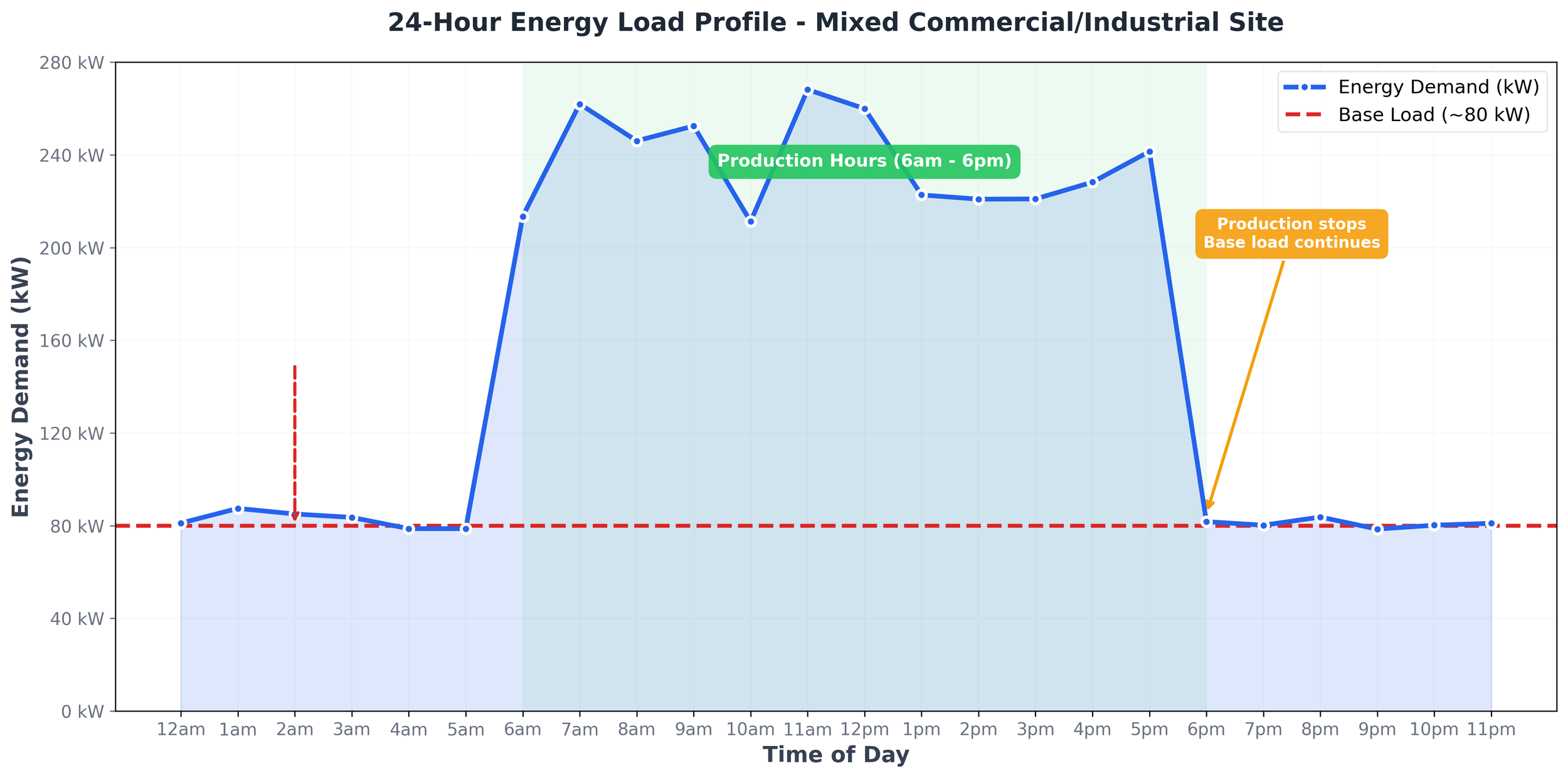
At a mixed commercial and light-industrial site, interval data showed a consistent overnight base load despite production stopping.
Site inspection confirmed:
HVAC is operating continuously due to control overrides
Compressed air leaks across multiple zones
Hot water systems running 24 hours for intermittent use
These issues were not visible through energy bills alone.
The audit identified control resets, leak repairs, and scheduling changes that reduced base load and improved system stability without major capex.
This pattern is common across both large commercial buildings and industrial facilities.
How audits reduce reliability and operational risk
Energy audits are often viewed as cost tools. For Operations Managers, the reliability lens matters more.
Audits help you:
Identify equipment operating outside intended parameters
Flag assets approaching the end of life based on performance, not age
Understand which systems drive peak load stress
Reduce unnecessary run hours that accelerate wear
This supports planned maintenance and staged replacement instead of reactive failure.
How audits support NABERS, lightly
For sites with NABERS exposure, energy audits help align operations with rating outcomes.
They do this by:
Reducing after-hours energy
Improving control stability
Aligning plant schedules to actual occupancy
Supporting NABERS improvement planning
The operational improvements come first. Rating outcomes follow.
Where energy audits fit in your role
Energy audits are most effective when Operations Managers are involved early.
They are practical tools to:
Diagnose recurring site issues
Define contractor scopes more clearly
Inform shutdown and access planning
Support capex discussions with evidence
Reduce friction between operations and finance
They do not replace maintenance. They make maintenance more targeted and effective.
Next step
If you manage a commercial or industrial site and want to understand whether an energy audit would support your operational priorities, the best next step is a short discussion.
We can talk through:
Your site type and operating hours
Current reliability and control issues
Budget and shutdown constraints
Whether an audit is the right tool for your situation
Find out about available energy saving grants and subsidies for your organisation on our Grants page.
