What an Industrial Energy Audit Typically Identifies
Industrial sites are rarely simple.
You are managing production targets, ageing equipment, contractor coordination, shutdown windows, and rising energy costs simultaneously. Energy use is directly tied to throughput, quality, and reliability.
An industrial energy audit does not just point out high bills. It identifies where energy is used, why it is used, and where commercial risk sits inside your plant.
If you are considering a commercial and industrial energy audit, it helps to understand what is typically uncovered on-site.
Where energy is actually going
Most industrial facilities know their total monthly spend. Few have a clear breakdown by system.
An audit typically identifies:
Major electrical loads by process line
Compressed air demand and leakage levels
HVAC loads in production and warehouse areas
Process heat use, including gas or steam systems
Base load outside production hours
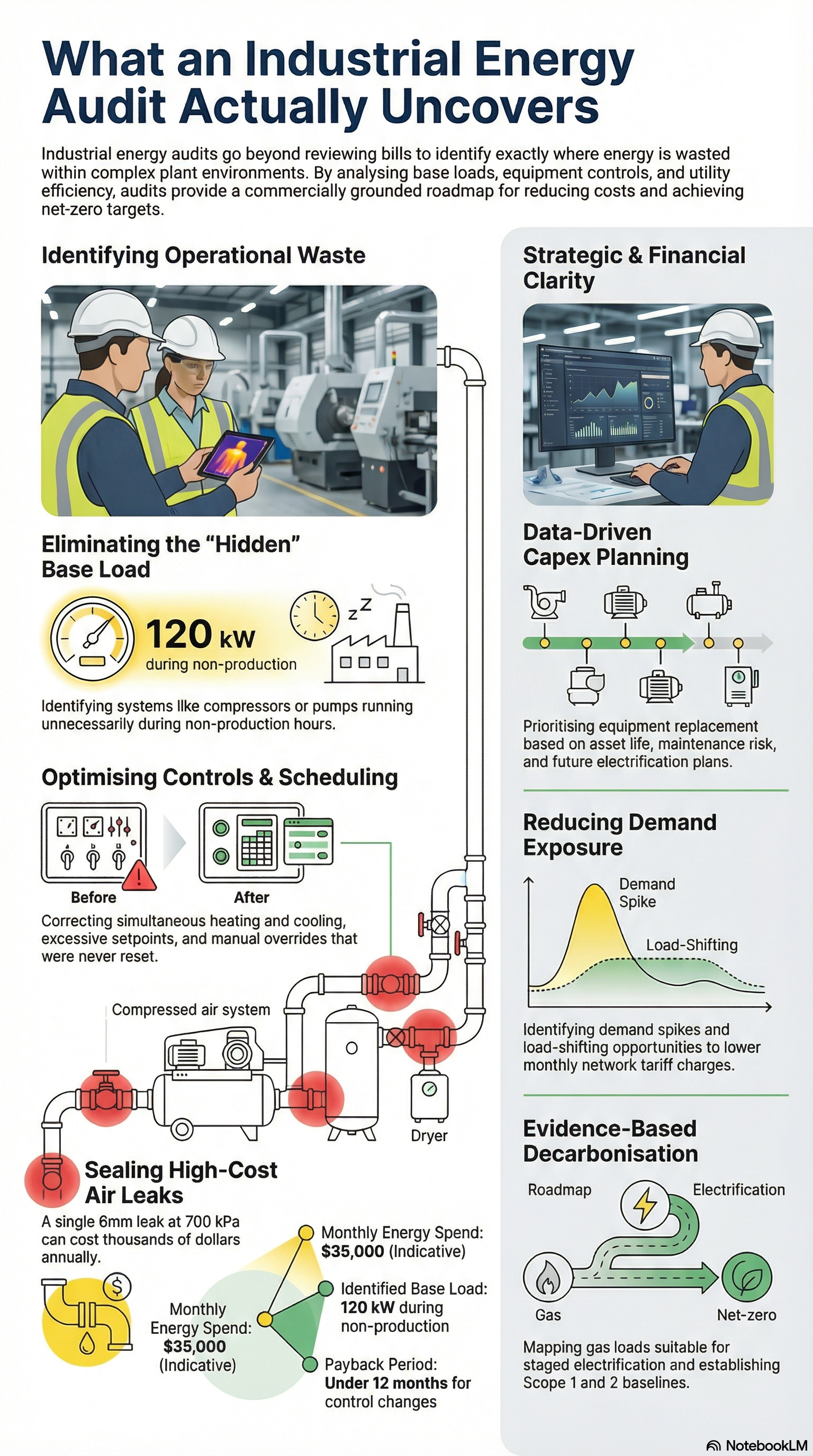
On many sites, interval data shows a consistent overnight or weekend load that is unrelated to production. This is often driven by compressors left in automatic mode, pumps running continuously, poorly scheduled HVAC, or legacy controls.
Indicative example.
The following is an indicative scenario based on typical audit findings and is not drawn from a specific client project. In a mid-sized manufacturing site spending approximately $35,000 per month on electricity and gas, interval analysis showed a 120 kW base load across non-production hours. Roughly one-third was linked to compressed air and cooling water pumps operating without load. Control changes alone delivered low-cost savings with a payback under 12 months. This type of finding is common across similar facilities.
Without a structured audit process, this drift is rarely visible.
Control and scheduling issues
Industrial sites evolve over time. Equipment is added. Control logic is modified. Contractors override settings to solve short-term problems.
Energy audits often identify:
Equipment running during idle periods
Simultaneous heating and cooling
Excessive setpoints
Redundant plant left enabled
Manual overrides never reset
These are not design failures. They are operational realities.
On a real site, you may not have the luxury of a clean shutdown to review every system. An audit works within those constraints. It combines site inspection, control review and data analysis to prioritise what is practical to fix first.
Compressed air and utilities inefficiency
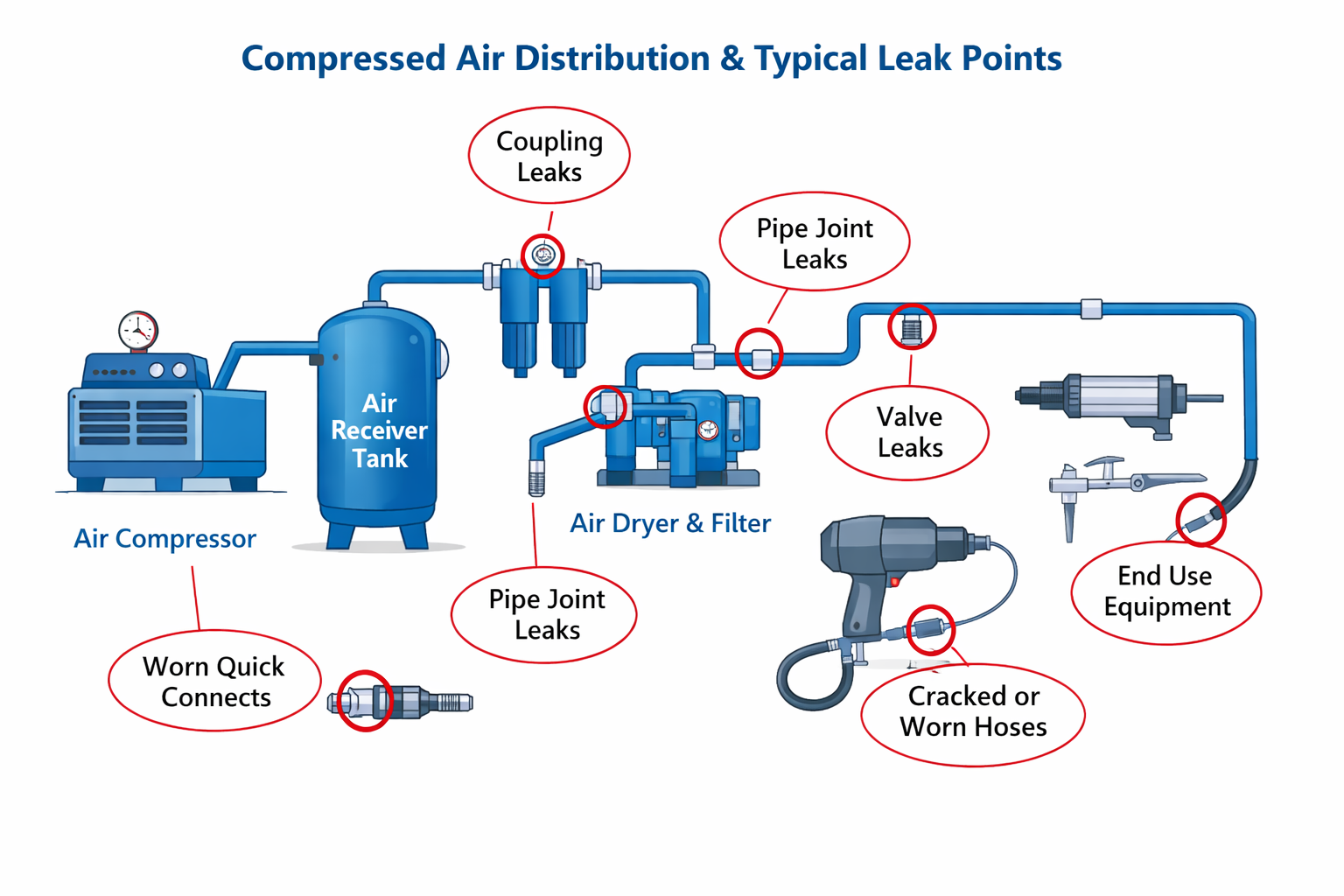
Compressed air is one of the most common findings in industrial audits.
Typical issues include:
System pressure is set higher than required
Poor compressor sequencing
Air leaks across the distribution
Inappropriate end-use applications
Even small leaks across multiple lines add up. A single 6 mm leak at 700 kPa can cost thousands per year in wasted electricity.
Steam, hot water and thermal systems are also common areas of loss. Insulation gaps, failed steam traps, poor condensate recovery and oversizing all contribute to unnecessary gas consumption.
These systems often remain outside day-to-day visibility until energy pricing pressures force a closer look.
Ageing plant and capex planning gaps
Many industrial sites are running equipment well past original design life.
An audit will identify:
Motors operating at low efficiency
Fixed speed pumps where variable load exists
Oversized boilers or chillers
Refrigeration systems with declining performance
Controls incompatible with modern optimisation
This does not automatically mean replace everything.
A good audit prioritises based on:
Remaining asset life
Maintenance risk
Production impact
Payback period
Alignment with future electrification plans
This supports capital planning rather than reactive replacement.
If you want to understand how audit levels influence the depth of this analysis, refer to our guide on AS/NZS 3598 energy audit levels, which explains how Type 1, Type 2 and Type 3 audits differ in rigour and modelling.
Tariff and demand exposure
Industrial sites are often exposed to demand charges and network tariffs that are poorly understood internally.
Audits commonly identify:
Short-duration demand spikes are driving high monthly charges
Mismatch between tariff structure and load profile
Opportunities for load shifting
Demand management options
For sites considering electrification or major upgrades, this becomes critical. A poorly planned heat pump or electric boiler can increase peak demand if not modelled correctly.
Linking audit outputs to decarbonisation
Energy audits are increasingly used to inform decarbonisation pathways.
Typical findings include:
Gas loads suitable for staged electrification
Opportunities for heat recovery
Solar PV expansion potential
Demand management to support future electrification
Emissions baseline for Scope 1 and 2 reporting
The audit becomes the evidence base for future upgrades.
This is particularly relevant where boards or asset owners require a clear pathway rather than isolated projects.
From findings to decisions
An industrial energy audit is not a list of ideas.
You should expect:
A ranked savings register
Clear capital and operational recommendations
Payback and financial modelling, where appropriate
Risk commentary
Practical implementation staging
For decision makers, the value is clarity. What can be done immediately with minimal disruption? What requires a planned shutdown? What should align with future capital works?
Industrial reality matters
Every industrial site has constraints:
Limited shutdown windows
Production first priorities
Contractor availability
Budget cycles
Compliance requirements
An audit that ignores these will not land internally.
Our focus is practical and commercially grounded. We work within real operating environments and frame recommendations in line with cost control, risk reduction and staged decarbonisation.
If you want to understand the broader scope of a commercial and industrial energy audit, you can read more on our main service page, which explains how audits are structured and delivered.
Next step
If you manage an industrial facility and want clarity on where energy costs, operational risks, and decarbonisation opportunities intersect, request a commercial energy audit or speak with us about your site constraints and priorities.
We can help you determine the appropriate audit level and scope before you commit capital.
Find out about available energy saving grants and subsidies for your organisation on our Grants page
