NABERS Ratings Explained for Commercial Buildings
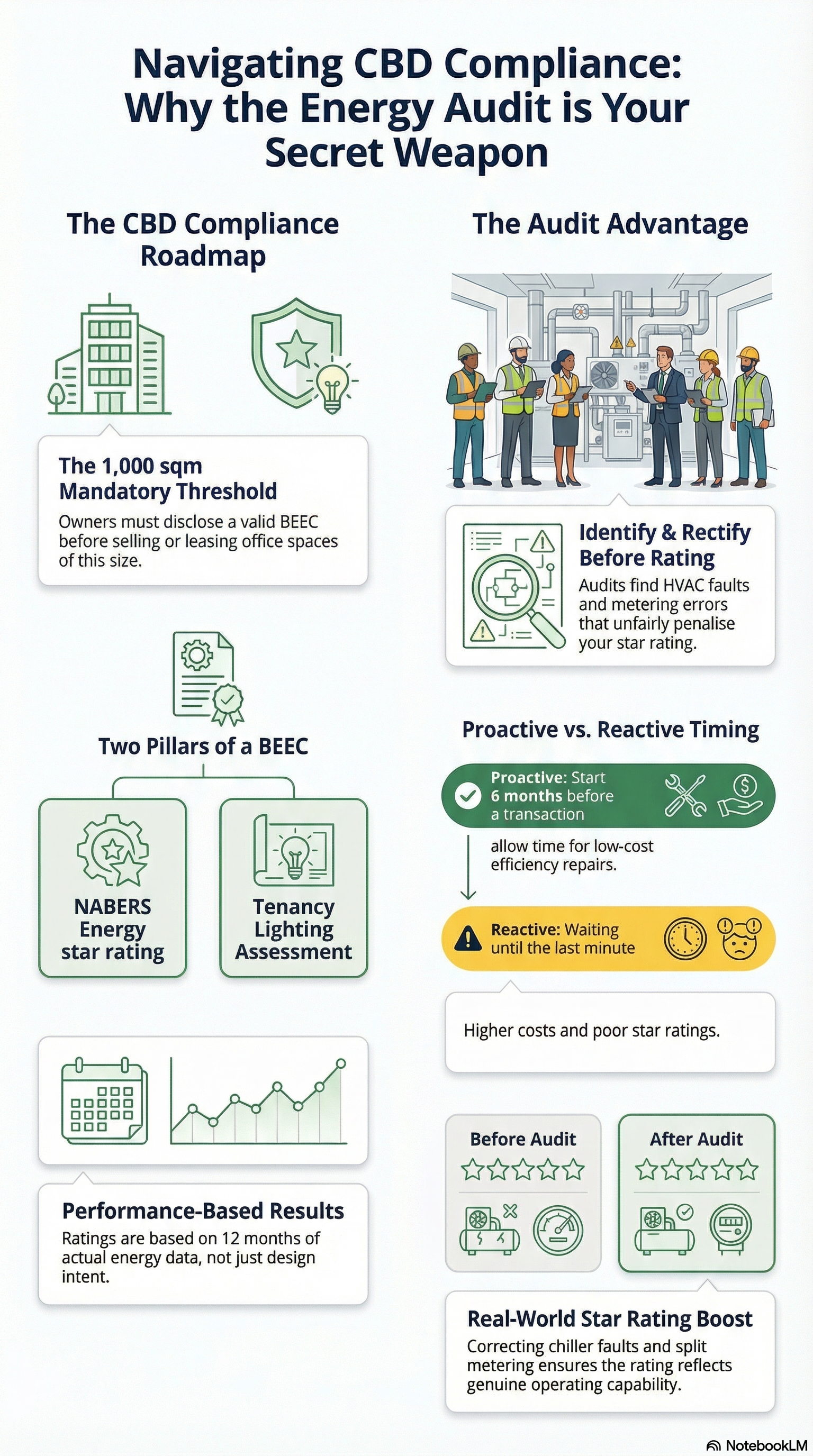
If your building has ever been described as a 2.5-star or 5-star building, that number comes from NABERS. The National Australian Built Environment Rating System measures how efficiently a building uses energy in practice. It is not a design rating or a theoretical benchmark. It reflects actual performance, based on metered consumption data over a 12-month period.
For building owners and property managers, understanding how NABERS Energy works is the first step toward improving it. And improving it almost always starts with a commercial energy audit.
What NABERS Energy Actually Measures
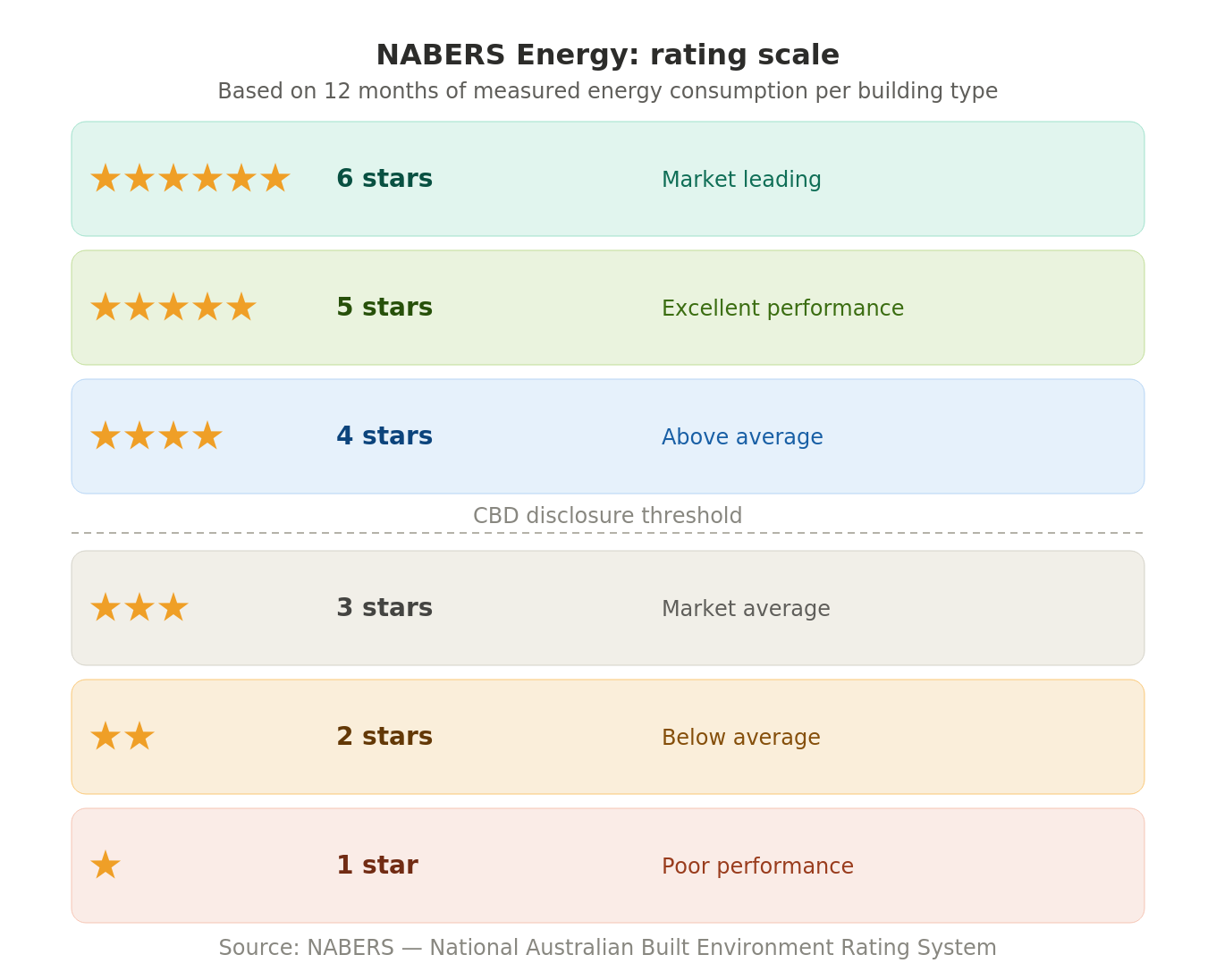
NABERS Energy rates the operational energy performance of a building against similar buildings of the same type. The rating runs from 1 star to 6 stars. A higher star rating means lower energy intensity relative to peers.
A 3-star rating represents average market performance for that building type. A 4-star or above signals above-average efficiency. A 5.5 or 6-star building represents best-in-class performance.
The rating is calculated using actual electricity and gas consumption data, adjusted for occupancy hours, climate zone, and building size. A third-party assessor verifies the inputs before the rating is issued.
Base Building, Tenancy, and Whole Building
NABERS distinguishes between three types of ratings for commercial office buildings. The base building rating covers central services such as HVAC, lifts, and common area lighting. It reflects what the landlord controls. The tenancy rating covers energy used within a leased space, which is the tenant's responsibility. The whole building rating combines both.
For most disclosure and comparison purposes, the base building rating is the primary benchmark. Property managers working across a mixed-tenancy portfolio need to clearly understand this distinction, since improvement strategies will differ depending on which boundary applies.
Why Your Star Rating Matters Commercially
A NABERS Energy rating affects your building in three practical ways.
First, disclosure. Under the Commercial Building Disclosure program, office buildings of 1,000 square metres or more are required to obtain and disclose a Building Energy Efficiency Certificate when they are sold or leased. This certificate includes your current NABERS Energy rating. A low rating is visible to prospective buyers and tenants before any negotiation begins.
You can read more about how this obligation works in our post on how energy audits support Commercial Building Disclosure compliance.
Second, operating costs. A 1-star improvement in NABERS Energy typically corresponds to a meaningful reduction in energy consumption. For a mid-size commercial building, that reduction can translate to tens of thousands of dollars per year in avoided costs. The exact figure depends on floor area, operating hours, tariff structure, and current equipment performance.
Third, asset value. Institutional buyers and major tenants increasingly use NABERS ratings as part of their property assessment criteria. A building rated below 3.5 stars carries a higher perceived risk and may attract downward pressure on valuation or rental terms.
What Drives a Low Rating
Most buildings with low NABERS ratings are not failing because of one large problem. They are underperforming across several systems simultaneously. Ageing HVAC plant operating outside its original design parameters is one of the most common contributors. Oversized or poorly sequenced chiller and boiler systems consume more energy than occupancy patterns require.
Lighting that has not been upgraded to LED, or that runs on fixed schedules rather than occupancy controls, adds significant base load. Lift systems, mechanical ventilation, and building management system setpoints all contribute to the final energy figure.
The building may also have data quality problems. Gaps in metered data, incorrect floor area inputs, or unaccounted tenancy sub-meters can distort the rating in either direction.
How an Energy Audit Gives You a Starting Point
Before you can improve a NABERS rating, you need to understand what is driving your current consumption. That is what a commercial energy audit does.
A structured audit aligned to AS/NZS 3598 documents your building's energy-consuming systems, measures actual performance under load, identifies gaps between current performance and best practice, and produces a ranked list of improvement opportunities with indicative savings and payback estimates.
For a building aiming for a higher NABERS rating, the audit report serves as the technical foundation for the improvement plan. It tells you which systems to prioritise, what the capital requirement looks like, and what rating improvement is realistic given your building's constraints.
Without that baseline, improvement efforts tend to be reactive. Building managers replace equipment when it fails rather than when the data shows it is underperforming. That approach rarely produces the rating step-change that owners are looking for.
For a practical overview of the disclosure compliance process and how ratings connect to transaction risk, see our earlier post: Commercial Building Disclosure and Energy Audits.
What a Realistic Improvement Looks Like
A building currently rated at 2.5 stars does not reach 5 stars in a single upgrade cycle. Meaningful improvement typically happens in stages over two to five years, depending on budget, capital approval processes, and tenancy constraints.
A typical first-stage program might include HVAC controls optimisation, lighting upgrades in base building areas, and building management system tuning. For an indicative mid-size office building of around 10,000 square metres, this kind of program can move a rating from 2.5 to 3.5 or 4 stars, depending on the condition of the existing plant.
Each stage should be informed by measured outcomes from the previous one. The audit provides the initial baseline. Ongoing interval meter data tracks progress toward the target rating.
Next Steps
If you are preparing a building for a NABERS rating assessment or trying to understand why your current rating is lower than expected, a commercial energy audit is the most reliable starting point. It gives you the system-level data you need to make decisions that actually move the number.
Contact us to discuss your building's energy performance and find out what a structured audit would cover for your site.
Find out about available energy saving grants and subsidies for your organisation on our Grants page.