How Energy Audits Reduce Operating Expenses
Rising energy costs hit your operating budget every month. Tariff changes, ageing equipment, and poor visibility into energy usage make it worse. An energy audit gives you a straightforward way to cut operating expenses (opex) without guessing or overcommitting capital.
This article explains how energy audits reduce opex for Australian businesses. It focuses on what happens on-site, the numbers, and how decisions are approved.
Why energy costs drift upward on active sites
Most businesses do not waste energy by choice. Costs rise because of practical issues.
Equipment added over time without a load review
Lack of controls or these can be overridden to keep in time
HVAC and equipment operating outside of operating hours
Tariffs are no longer aligned with the demand profile
Maintenance focused on uptime, not efficiency
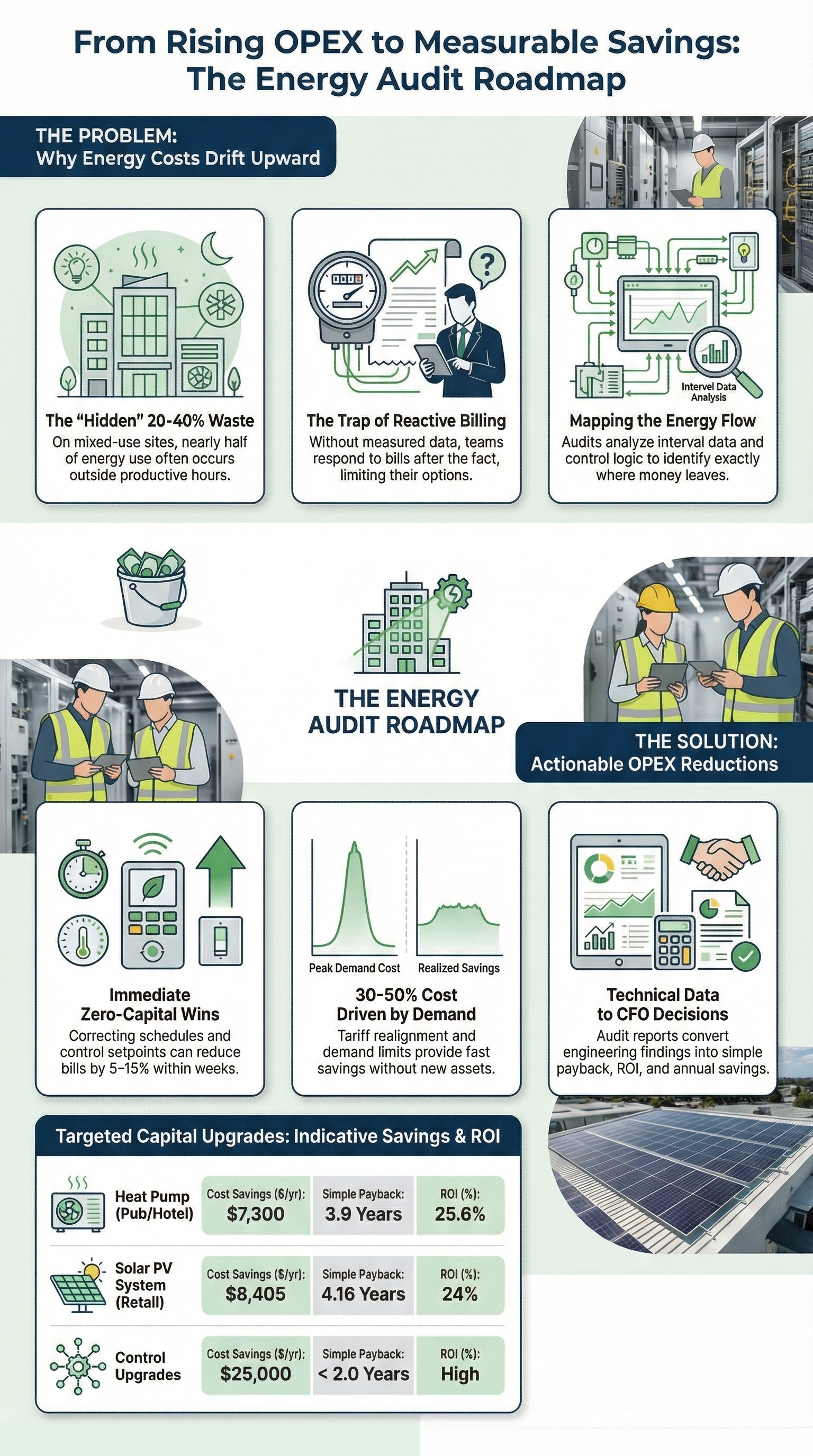
Without measured data, teams respond to bills after the fact. That limits your options.
What an energy audit actually measures
A commercial or industrial energy audit starts with how energy flows through your site.
Interval electricity and gas data
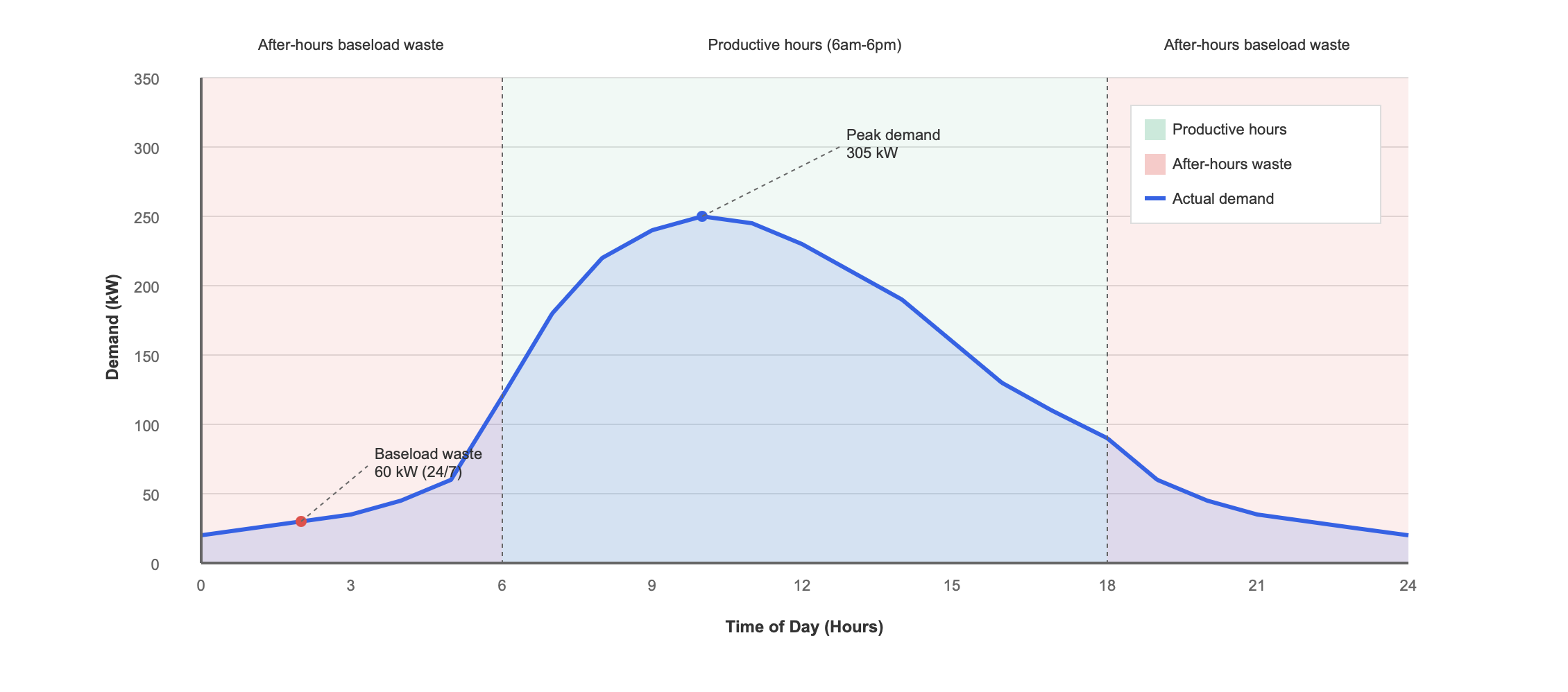
Demand peaks and load shape by time of day
Major plant energy contribution
Control logic and scheduling
Standby and after-hours loads
This creates a site-specific energy profile. It shows where money leaves the business. Load profile analysis often reveals that 20 to 40 per cent of energy use occurs outside productive hours on mixed-use sites.
Immediate opex reduction opportunities
Many savings do not require capital spending. Audits often identify actions that reduce costs within weeks because they focus on how existing systems are operating rather than how they were designed to operate.
Energy audits target problems such as plants running longer than required and controls being overridden during breakdowns and never reset. These issues are prioritised because they are low risk and fast to implement. Typical actions include tightening operating schedules, correcting control setpoints, reinstating demand limits, and fixing fundamental control logic conflicts between systems. In large commercial and mixed-use sites, these changes often deliver immediate bill reductions without disrupting occupants or production.
From an operational perspective, these actions also stabilise systems. Reduced runtime lowers equipment wear, reduces reactive maintenance, and improves reliability. For finance teams, the benefit is simple. Lower monthly energy costs without new assets on the balance sheet.
Tariff and demand optimisation
Audits compare your load profile against available tariffs. Demand charges often account for 30 to 50 per cent of electricity costs at large sites. Simple changes such as demand limits, staggered starts, or tariff realignment can reduce bills by 5 to 15 per cent.
In practice, many sites are on legacy tariffs that no longer reflect their operations. Load has shifted over time due to extended hours, new equipment, or changes in occupancy, but tariffs remain unchanged. An audit compares your actual half-hourly demand with current network and retailer options to identify misalignments. This often reveals that the site is paying for capacity it no longer needs, or being penalised for short-duration peaks that can be managed.
Scheduling and controls
Typical findings include HVAC running overnight, compressed air left on, or process plant running during breaks. Control corrections often deliver savings of 3 to 10 per cent at minimal cost.
In many cases, these issues result from temporary overrides that became permanent. A control was bypassed during a breakdown, a timer was extended to cover a shutdown, or manual operation was used to manage comfort complaints. Once the immediate issue passed, the system was never returned to regular operation. Over time, these small changes compound into a persistent base load that operates regardless of occupancy or production.
Energy audits identify these conditions by comparing control logic, schedules, and meter data against how the site is meant to operate.
Reactive power and power quality
Poor power factor increases network charges. Correction equipment is low-cost and fast to deploy. Payback typically ranges from 2 to 3 years.
These actions matter to CFOs because they lower opex without locking in capex.
Where capex delivers sustained opex reduction
Audits also identify upgrades that reduce long-term operating costs across major facility systems through capital spending.
Common capital improvement opportunities include:
Motor and drive efficiency upgrades - Replacing outdated motors with high-efficiency models and installing variable speed drives to match equipment output to actual demand
Waste heat recovery systems - Capturing and reusing heat from existing processes to reduce heating costs
Heating, cooling, and ventilation optimisation - Upgrading or right-sizing HVAC systems to match current building use and occupancy patterns
Compressed air and utility system improvements - Redesigning distribution systems to eliminate leaks and reduce pressure losses
Fuel switching to electricity - Converting gas-based heating and process equipment to electric alternatives where operating costs are lower
Indicative examples from mixed portfolios show:
Simple HVAC upgrades with 2 to 4 year payback
Motor and drive upgrades with 1.5 to 3-year payback
Compressed air projects reduce energy costs by 20 to 30 per cent
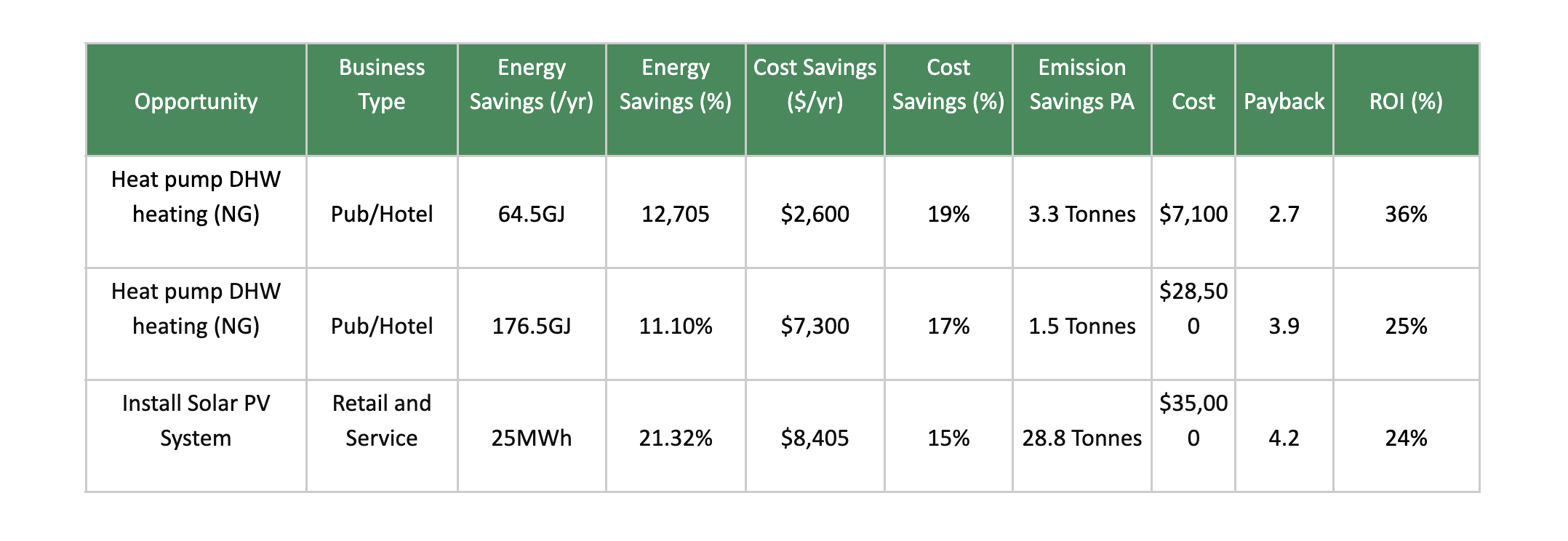
These figures depend on runtime, tariffs, and access constraints. Audits test the assumptions before recommendations go forward.
How audits handle real operational constraints
Energy audits are not theoretical exercises. Good audits account for how your facility actually operates day to day.
Typical operational constraints auditors work around:
Limited downtime windows - No ability to interrupt business operations, customer service, or production schedules for extended testing or equipment shutdowns
Ageing equipment with limited support - Older systems where parts, technical documentation, or original equipment manufacturer (OEM) service may be difficult to source
Contractor and access coordination - Working within maintenance windows, safety protocols, and coordinating with existing service providers
Competing maintenance priorities - Balancing energy improvements against urgent repairs, compliance requirements, and operational reliability needs
Recommendations get staged. Quick wins come first. Medium-term upgrades align with planned shutdowns. Longer-term projects feed into capital planning.
A typical audit report separates actions into short-term, medium-term, and long-term measures. This keeps finance and operations aligned.
How CFOs translate audit findings into decisions
For finance teams, the value lies in clarity.
Audit reports convert technical findings into:
Annual opex reduction
Capex required
Simple payback
Indicative ROI
Implementation risk
For example, a $40,000 control upgrade delivering $25,000 in annual savings shows a payback in under 2 years. That moves faster through approval than a large plant replacement with uncertain timing.
This is where audits link directly to asset strategy and budgeting.
What to do next
If energy costs are rising and visibility is low, an audit gives you control back.
The next step is not committing to upgrades. It is understanding where your money goes and what actions fit your site constraints.
You can request an energy audit or discuss your site, budget pressures, and operational limits with us to assess whether an audit is suitable and how it should be scoped.
Find out about available energy reduction grants and subsidies for your organisation on our Grants page