Commercial and Industrial Energy Audits Australia
Energy costs rise. Plant ages. Budgets tighten.
For Facility Managers and Operations teams, energy affects operating costs, reliability, comfort, and compliance in ways that are increasingly hard to ignore each year.
A commercial and industrial energy audit provides clarity on how energy is used across your facility, where inefficiencies lie, and which actions are realistic within your operating constraints (along with their cost-benefit).
This page explains what an energy audit involves in Australia, what happens on site, and how audits support operational decisions.
What a commercial and industrial energy audit is
A commercial and industrial energy audit is a structured assessment of energy use across a facility.
In Australia, audits follow AS/NZS 3598, which defines different levels of audit depth based on the decisions you need to make.
An audit focuses on:
How electricity and gas are consumed across major systems.
Which equipment and schedules drive demand.
Where controls, maintenance, or operating practices affect performance.
What opportunities exist to improve energy efficiency with equipment upgrades and operational changes.
The output is a practical set of findings you can act on.
What happens during an energy audit on site?
The value of an audit comes from site time, not desk analysis.
A typical audit includes:
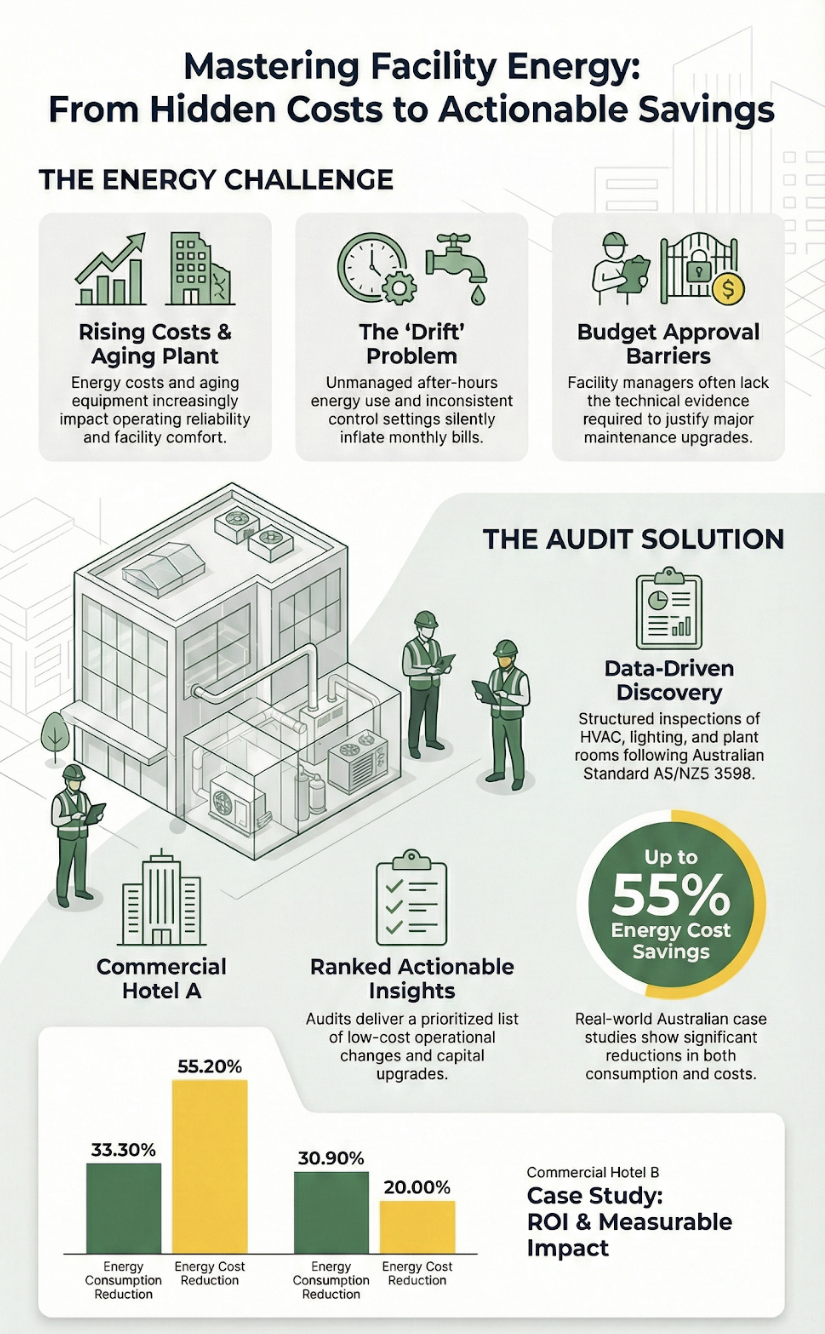
Walkthroughs of plant rooms, services areas, and equipment spaces
Inspection of HVAC, lighting, and other major loads
Review of controls, setpoints, and operating schedules
Discussions with maintenance and operations staff
Switchboard and metering inspections
Audit levels and depth
Energy audits in Australia are delivered at different levels depending on the energy usage and level of sophistication of the analysis that is required.
At a high level, different types of energy audits are used for different purposes:
Type 1 energy audits, high-level reviews to identify obvious inefficiencies and quick wins
Type 2 energy audits, detailed analysis of energy data, systems, and operational performance
Type 3 energy audits, investment-grade audits to support major capital and asset decisions
The right level depends on your site, budget cycle, and immediate priorities.
A detailed explanation of each energy audit type and when to use them can be found here: types of Energy Audits
What Facility Managers use energy audits for
Facility Managers rarely commission audits for efficiency alone.
Common drivers include:
Rising energy bills with no clear explanation
HVAC complaints and comfort issues
Equipment nearing end of life.
Pressure to justify maintenance and upgrade budgets.
Compliance or performance reporting requirements
An audit helps you:
Identify waste you can address without large capital spend.
Prioritise upgrades instead of reacting to failures.
Build evidence for budget approvals.
Improve control stability and reduce after-hours drift.
This turns energy from a recurring problem into a managed input.
Key takeaways for Facility Managers
If you manage a commercial or industrial site, an energy audit helps you:
Understand where energy is actually used across the site
Identify low-disruption savings before committing capital
Reduce after-hours energy drift and control issues
Build evidence for maintenance and upgrade budgets
Prioritise actions instead of reacting to failures
Realistic expectations on savings and outcomes
Savings from an audit depend heavily on site condition, operating hours, and control quality.
Energy audits typically identify opportunities across a range of effort levels from low-cost operational changes through to larger capital projects.
The best audits focus on what's achievable within your constraints, not theoretical maximum savings.
Results vary, but real projects show what is achievable when issues are clearly identified and acted on.
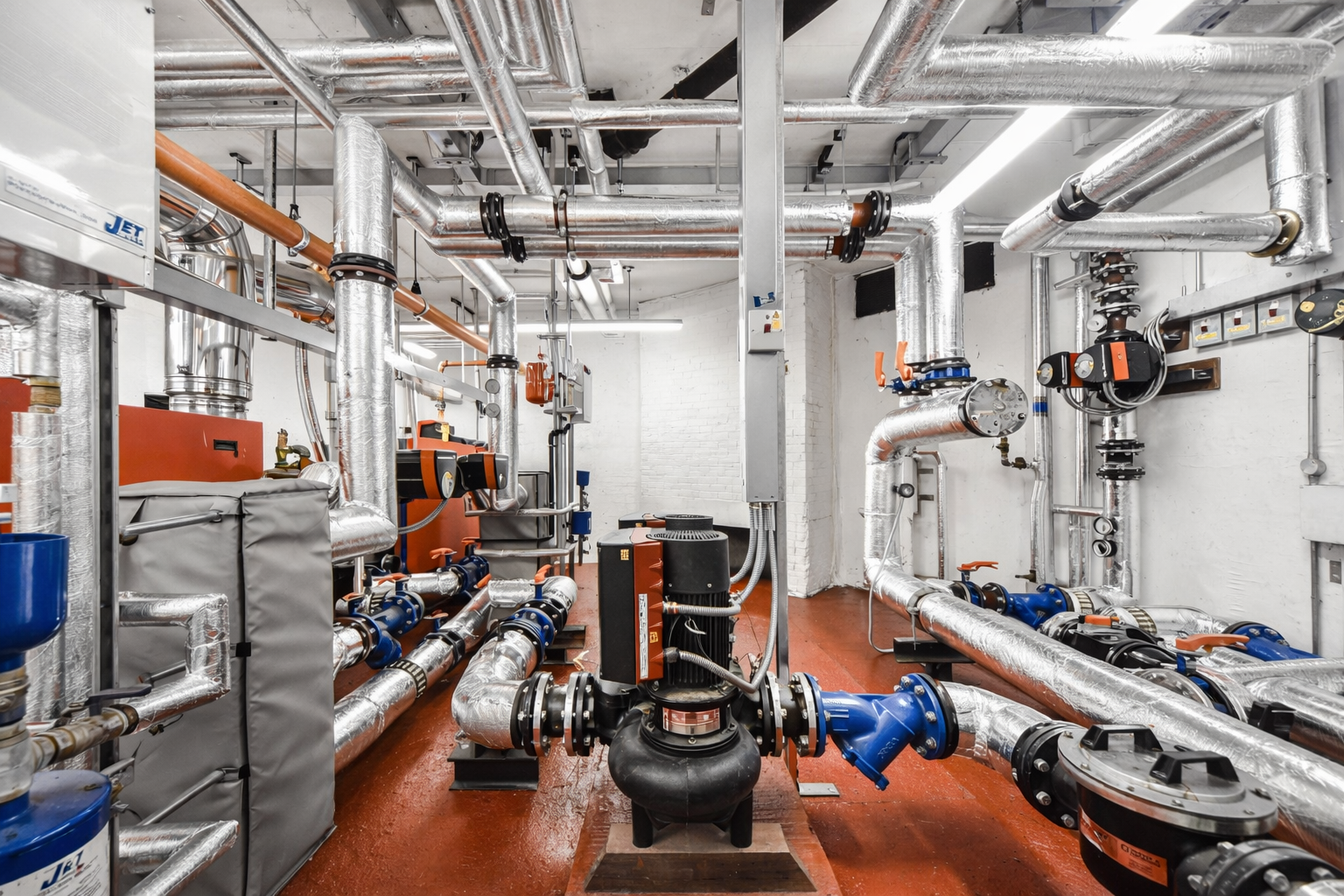
For instance in recent case studies, measurable energy and cost reductions were achieved:
• One hotel reduced overall energy consumption by 33.30 percent and energy costs by 55.20 percent
• Another hotel achieved a 30.90 percent reduction in energy use and a 20.00 percent reduction in energy costs
See more real-world Energy Audit case studies and detailed outcomes for Energy Audits we’ve completed.
What you receive from an audit
A well-scoped audit should deliver outputs you can actually use.
At minimum, expect:
A clear summary of how energy is used on-site, including a breakdown based on your equipment.
Ranked opportunities.
Enough detail to have informed conversations with contractors and management.
The specifics of what a good audit report includes are covered in future insights – sign up to our newsletter to get updates.
Energy audits and NABERS performance
Energy audits can support NABERS improvement plans by identifying actions that improve operational performance.
In practice, audits help by reducing unnecessary base load, improving control stability, and identifying after-hours energy use that often goes unmanaged. They also highlight equipment operating outside intended schedules or control settings, which can negatively affect NABERS outcomes over time.
Audit findings give Facility Managers clearer visibility over where operational changes can support NABERS targets before considering capital upgrades.
Audits inform NABERS strategies. They do not replace NABERS ratings or assessments.
How we can help you
We help organisations by delivering commercial and industrial energy audits that focus on how sites actually operate.
Our audit process typically includes:
Data driven discovery: Understanding your site, operating hours, energy consumption, and constraints before any site work
Expert Analysis: On site inspections of major plant, controls, and distribution systems from our engineering team
Clear, Costed Recommendations: Discussions with maintenance and operations teams to understand known issues and receive an action plan
Ongoing Support
Find out more information via:
Energy Audits for Facility Managers
Where required, findings can feed into broader energy and decarbonisation planning once core operational issues are addressed.
When an energy audit makes sense
An audit is most valuable when:
Energy costs are increasing without clear drivers.
Plant performance is inconsistent or unreliable.
Major equipment decisions are approaching.
You need evidence for budget approvals.
Compliance or disclosure requirements are increasing.
If you're constantly reacting to issues instead of prioritising them, an audit provides structure.
Request an energy audit
If you manage a commercial or industrial facility and need clarity on energy cost, system performance, and next steps, an energy audit is the starting point.
Find out about available energy saving grants and subsidies for your organisation on our Grants page.