Preparing a Building for NABERS Rating Improvement
Improving a NABERS Energy rating is a measurable goal. But the preparation required to achieve that goal often catches building owners and property managers off guard. Getting ready is not simply a matter of booking a rating assessment. It involves data accuracy, physical plant condition, operational practices, and a clear understanding of where your building currently stands.
This post outlines what practical preparation looks like before pursuing a NABERS Energy rating improvement.
Understand your current position first
Before any improvement work starts, you need an honest baseline. That means knowing your current NABERS Energy rating (if you have one), your metered energy consumption over the past 12 months, your net lettable area (NLA), and your building's actual hours of operation.
If you have not yet had a rating assessed, start there. As covered in our post on NABERS Ratings Explained for Commercial Buildings, a base building rating measures the energy used by central services, including HVAC, base building lighting, lifts, and other shared systems under the building owner's control.
Without accurate baseline data, any improvement target is guesswork.
Get your metering and data in order
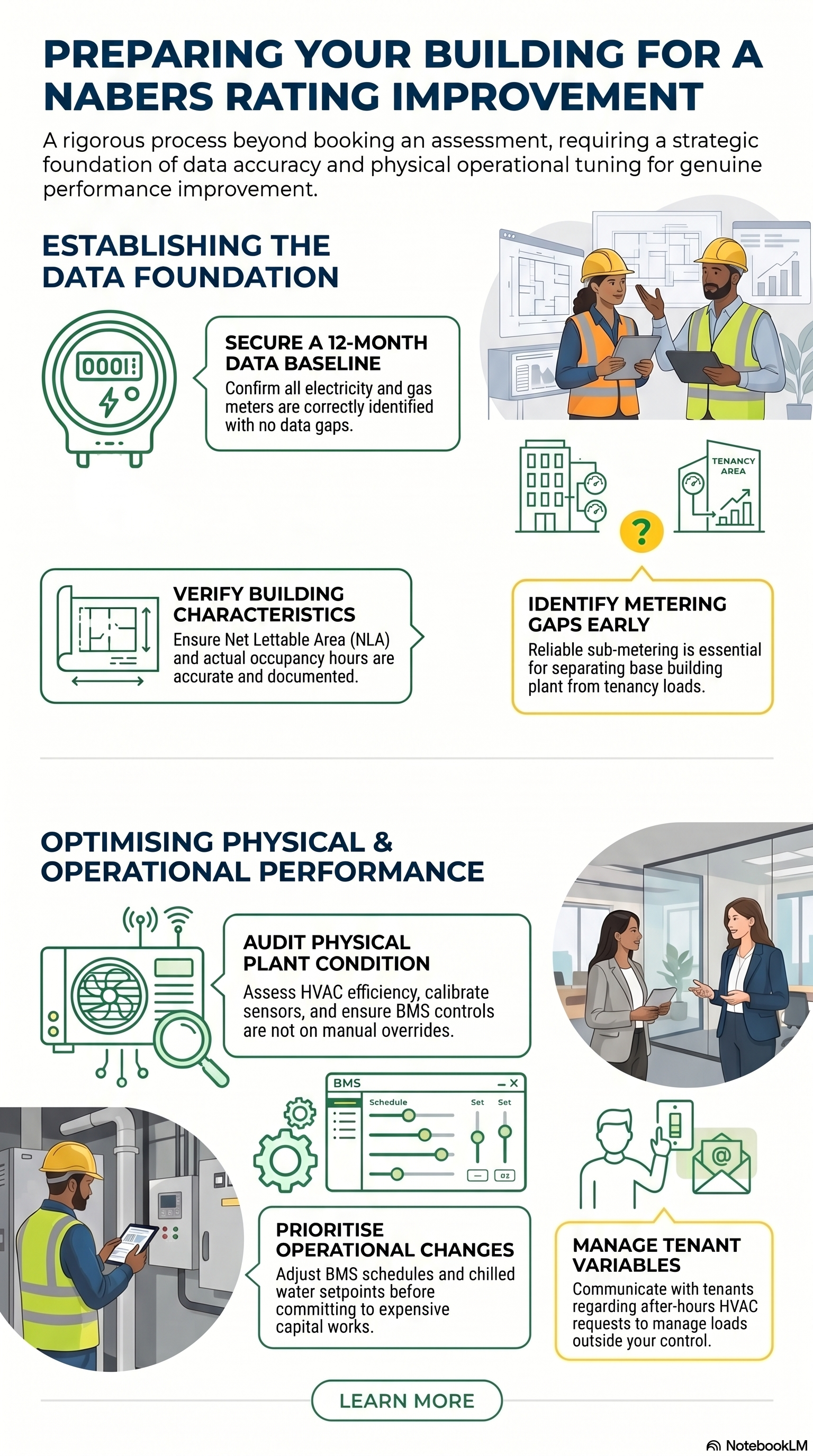
A NABERS rating relies on 12 months of actual metered energy consumption data. Before pursuing an improvement, confirm:
All electricity meters associated with base building plant are correctly identified and separated from tenancy meters
Gas consumption, if applicable, is metered and attributed correctly
Meter data is available for the full 12-month rating period with no gaps
Any recently installed sub-metering is functioning and producing reliable data
Metering gaps are one of the most common reasons building owners cannot proceed with a rating or an improvement plan. Resolving these gaps early saves significant time later.
Verify your building inputs
The NABERS rating calculation also depends on accurate building characteristic inputs. Review and confirm:
Net lettable area (NLA): measured correctly and consistently with any prior ratings
Occupancy hours: the actual operating schedule of your building, not an assumed default
Car park details: if included in the rating boundary, confirm the area and operating hours
Errors in these inputs shift your rating result. A building with overstated NLA may appear more efficient than it is. A building with understated hours may appear less efficient. Both create problems when you try to demonstrate genuine improvement over time.
Assess the physical plant condition
A building's HVAC system is typically the largest single driver of base building energy use. Before targeting a rating improvement, assess the condition and control settings of the key plant:
Chillers and cooling towers: Are they operating at design efficiency? Are controls calibrated?
Air handling units (AHUs): Are minimum outdoor air settings correctly configured? Are economiser modes functioning?
Building management system (BMS): Is it actively controlling the building, or running on overrides and manual schedules?
Base building lighting: Is it on occupancy-based controls, or running continuously during and after hours?
This is where a commercial energy audit informs your preparation priorities. As outlined in our post on how energy audits support NABERS improvement plans, the audit identifies which systems are underperforming and quantifies the likely impact of addressing them. That gives you a basis for prioritising maintenance, operational changes, or capital works before committing to a rating target.
Address operational practices before capital works
Many NABERS improvements are achieved through operational changes before any capital expenditure is required. Common opportunities include:
Adjusting BMS schedules to reflect actual occupancy rather than default building-wide settings
Raising chilled water setpoints within acceptable comfort tolerances
Fixing known plant faults such as stuck outside air dampers or failed variable speed drives (VSDs)
Turning off or reducing plant in unoccupied zones outside core hours
These changes cost little to implement but affect energy consumption from day one. Completing them before the improvement rating period begins means the full 12 months of improved performance counts toward your target rating.
Engage your tenants where relevant
A base building rating covers a plant under the building owner's control. Tenant fitouts are excluded from the calculation. However, tenant behaviour still affects base building systems. After-hours requests, extended HVAC use, and supplementary cooling loads all influence how hard the base building plant has to work.
Before beginning an improvement period, communicate your plans to tenants. Setting clear expectations around after-hours HVAC requests and building operating hours helps manage the variables that sit outside your direct control.
Connect preparation to a structured plan
If your building is subject to the Commercial Building Disclosure scheme or you are working toward a formal rating milestone under a NABERS Commitment Agreement, preparation becomes a structured obligation rather than a discretionary step. More detail on Commitment Agreements and when they apply is covered in our post on how NABERS Commitment Agreements work and when an audit is required.
For buildings pursuing voluntary improvement, the same preparation principles apply. Structured preparation reduces the risk of investing in upgrades that do not deliver the expected rating outcome.
Where an energy audit fits into the preparation
An energy audit does not just identify upgrade opportunities. It also flags data gaps, metering issues, and plant problems that will prevent a rating improvement before they become expensive surprises. For building owners who are serious about achieving a measurable NABERS outcome, a commercial energy audit is the most practical tool for understanding what preparation is actually required at your site.
Ready to understand what preparation your building needs?
If your building has a NABERS improvement target and you want to understand what is required on site, contact us to discuss your building and next steps.
