How Energy Audits Work in Large, Occupied Commercial buildings
Large commercial buildings rarely stop operating. Offices stay open. Hospitals run all day. Shopping centres trade across extended hours. Energy audits still happen, but they work differently to avoid disruption.
This article explains how commercial and industrial energy audits are conducted in live, occupied buildings, what typically happens on site, and what you should expect as a building operator or asset owner.
Why do occupied buildings need a different audit approach
An empty building is simple. An occupied one is not.
In large commercial buildings, you deal with tenants with different operating hours, critical services that cannot be shut down, after-hours access restrictions, safety permits and inductions, and complaints when systems are disturbed.
A competent energy audit accounts for these realities from the start. The goal is insight without disruption.
How the audit is scoped before anyone visits the site
Most of the work starts before the site visit.
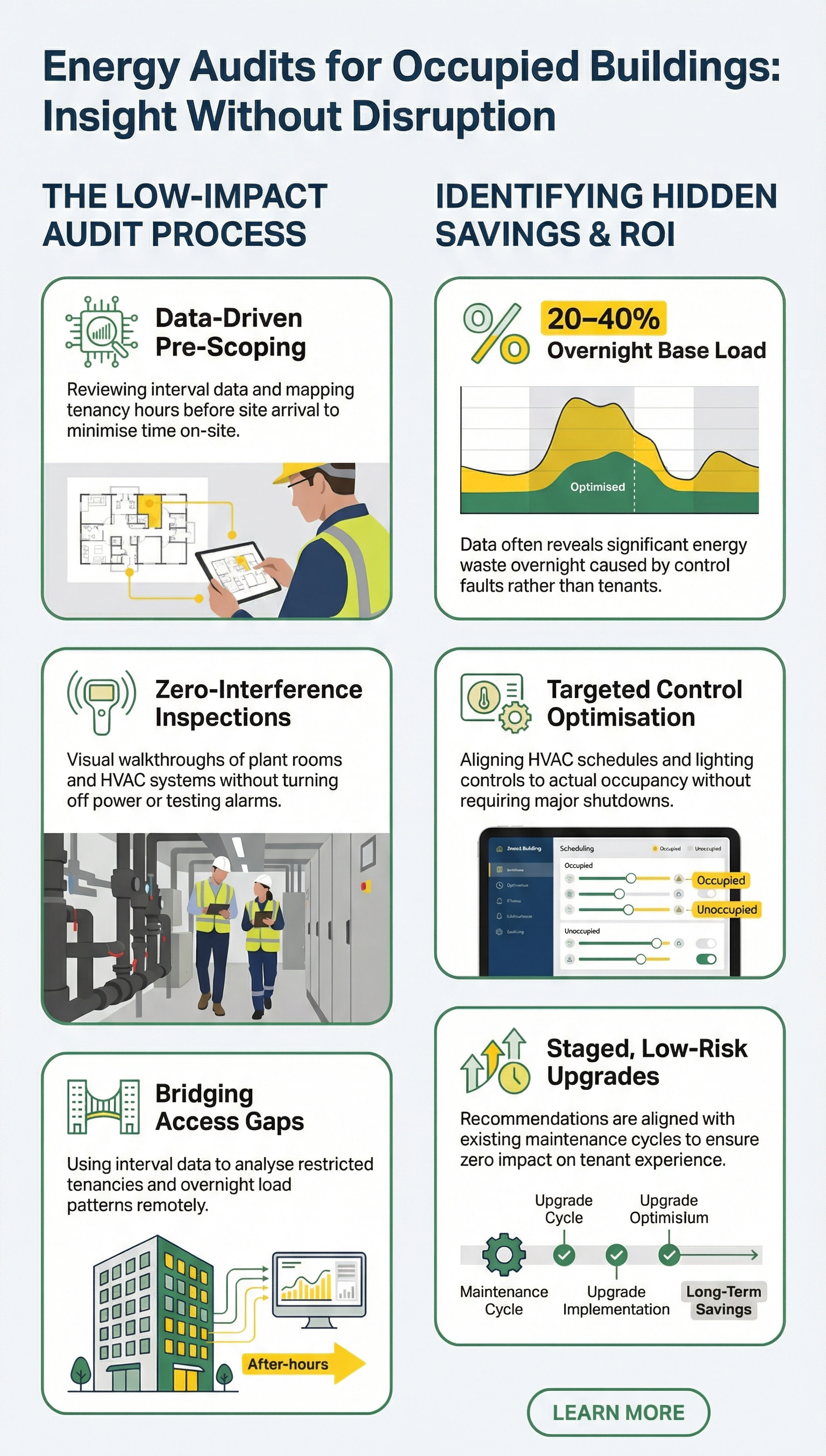
For occupied buildings, this includes reviewing interval electricity and gas data first, understanding base load and after-hours patterns, mapping tenancy types and operating hours, identifying critical systems that cannot be interrupted, and planning inspections around access windows.
This early work reduces time on site and avoids unnecessary interference with tenants.
What happens during the site inspection
The site visit is structured, targeted, and controlled.
Typical activities include walkthroughs of plant rooms, risers, switchboards, and rooftops; visual inspections of HVAC, lighting, and control systems; verification of operating schedules against actual use; spot measurements that do not interrupt supply; and discussions with facility and operations staff.
Auditors do not turn systems off. They do not test alarms. They do not interfere with tenant spaces unless approved in advance.
Most inspections happen during normal hours, with limited after-hours access only where required.
Common systems reviewed in occupied buildings
The audit focuses on systems that drive energy cost and risk.
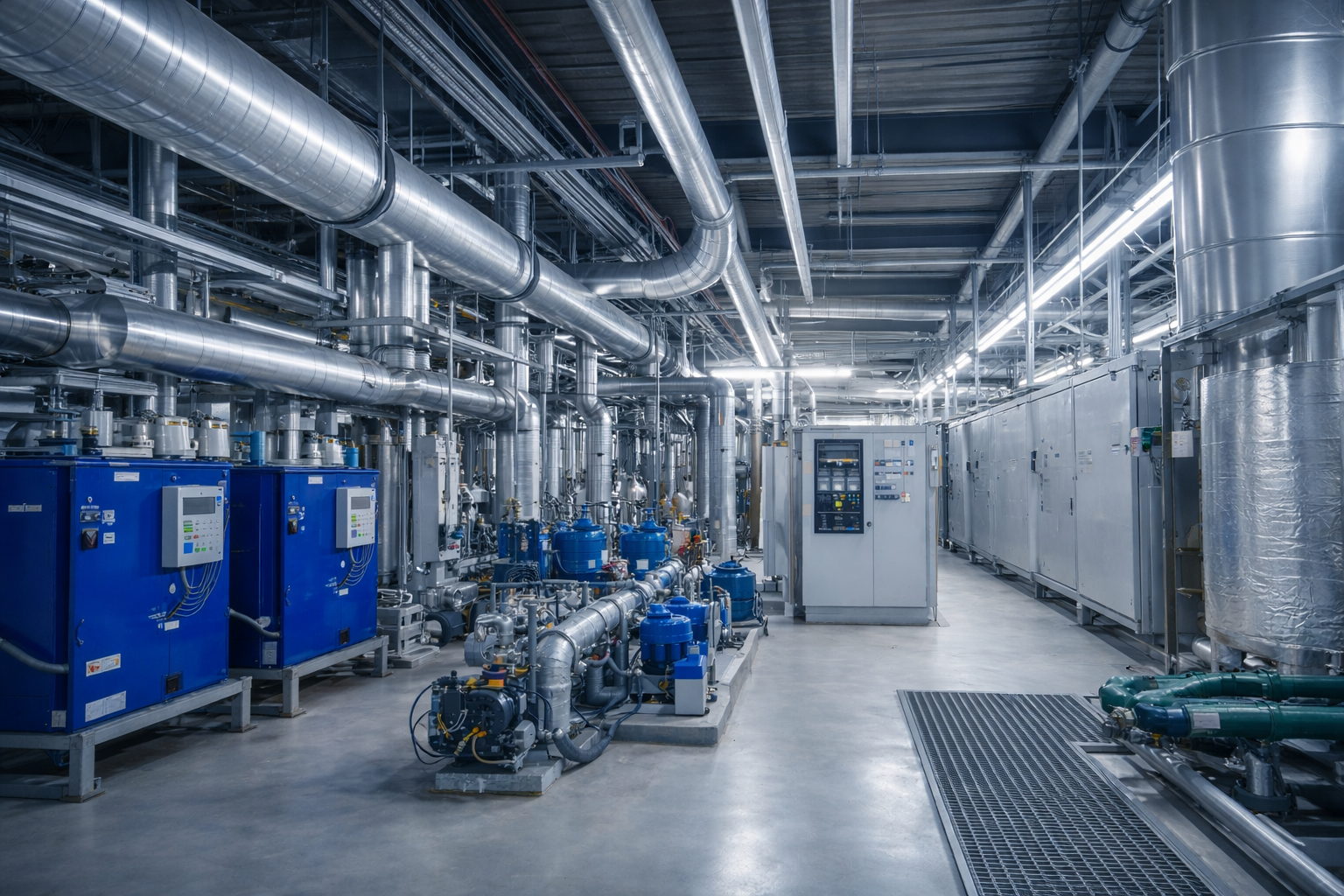
These usually include central HVAC plant and control strategies; after-hours and weekend operations; base-load drivers such as lifts, car parks, data rooms, and essential services; lighting controls in common areas; domestic hot water systems; and tenant versus base-building energy separation.
How energy data fills the gaps you cannot inspect
You cannot access every tenancy. Data fills the gap.
Interval data reveals overnight and weekend loads, plant running outside required hours, seasonal demand patterns, and load spikes linked to control issues.
In large offices, it is common to see 20 to 40 per cent of peak load still present overnight. This often points to control faults rather than tenant behaviour.
Indicative example from an occupied commercial building
In a multi-tenant office building with extended trading hours, interval data showed a flat overnight base load of 120 kW. The HVAC plant was operating on outdated schedules. Car park ventilation ran continuously rather than on demand. Lighting controls were manual in shared areas.
No shutdowns were required. Recommendations focused on control changes, schedule alignment, and staged upgrades during planned maintenance.
Why is disruption risk managed carefully?
Poorly run audits create complaints. Good audits do not.
Disruption risk is managed by clearly scoping work before site work, coordinating with facility and operations teams, avoiding tenant spaces when necessary, using data analysis instead of intrusive testing, and aligning inspections with safety and access rules.
If an audit requires deeper investigation, this is flagged early and planned separately.
What the audit delivers for occupied buildings
The output is practical and staged.
You typically receive a clear picture of where energy is actually used, identify control and scheduling issues, identify low-disruption savings opportunities, identify medium-term upgrades aligned with maintenance cycles, and receive capital options with operational risk clearly explained.
How does this support better decisions?
For facility and operations managers, the audit reduces firefighting.
For CFOs and asset managers, it provides cost reduction without tenant impact, evidence for capex decisions, risk visibility around ageing plant, and confidence that savings are real and achievable.
Next step
If you operate a large, occupied commercial building, the right audit approach matters.
You can request a commercial energy audit or discuss your site constraints and access limitations to determine the appropriate audit level for your building.
Find out about available energy saving grants and subsidies for your organisation on our Grants page.
